This year, olives from Debiganj in Panchagarh are going beyond Bangladesh’s borders. They are being sent to Malaysia through the internet. Local merchants are shipping freshly picked olives to other countries, which is a new way for the district’s agricultural economy to grow.

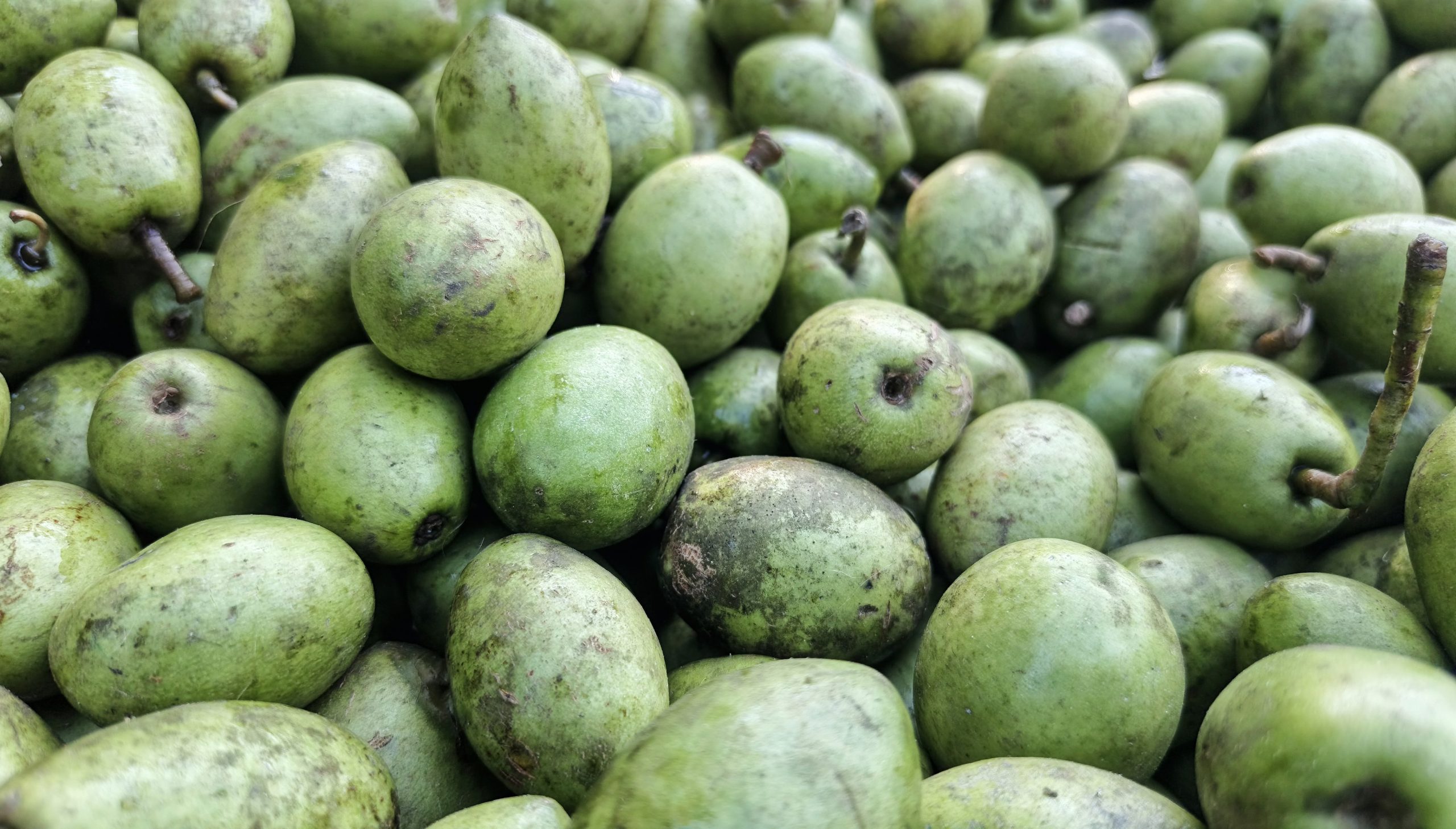
The olive market in Debdarutola, Debiganj wakes up as the sun rises. There are vans, rickshaws, motorcycles, and pickup trucks full of sacks of olives. The fruits are dumped onto plastic sheets on the ground, where they make green mounds. Buyers fill their bags and go on their way.
The seasonal market has been busy with people coming and going from morning to night since early October. Local sources say that over 100 metric tons of olives are sold every day, which is worth about 1.5 crore taka.
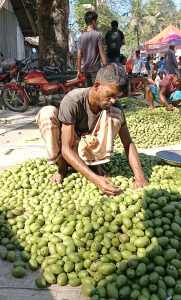
Small sellers from different unions bring their olives to the market. At the same time, wholesalers from Rajshahi, Naogaon, Bogura, Rangpur, and Dinajpur come to Debiganj to buy them. Prices range from Tk 25 to Tk 40 per kilogram, depending on the quality.
Abu Ansar, a local dealer, said, “We buy olives directly from farmers and sell them here.” It makes things easier for the farmers and makes sure we get a solid income. Prices are strong this year, therefore earnings are too.
Bakul Hossain, a wholesaler from Naogaon, said, “I come here every year because the Debiganj olives are so good.” I’ve bought olives this season for Tk 25 to Tk 45 per kg. We transfer them to food processing factories—sometimes by truck, sometimes by train.”
The olive season usually begins in October and ends in November. Traders often buy the fruits right from the trees before the season starts. This saves farmers time and money while making sure prices are fair.
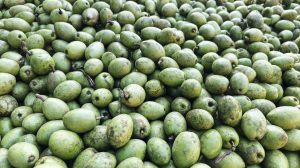
Kadery Kibria Rana, who rents out the market, said, “This is a traditional olive market.” Olives are the most important fruit sold here, but other fruits including pomelo, lime, and betel leaf are also available. Farmers from a number of local areas sell their goods here, which gives thousands of people jobs.
This year, Debiganj’s olives are also being sold in other countries. Mukul Islam, a local shopkeeper, said, “The quality of our olives has drawn interest from abroad.” We are now sending goods to Malaysia through online orders. “We could export even more if the government helped us.”
The Panchagarh Department of Agricultural Extension (DAE) says that olives are produced on roughly 13.8 hectares of land, in tiny orchards, household gardens, and along highways and field boundaries. The district made 309 metric tons last season, and this year it is projected to make more.
Farmers are still interested in growing olives because they don’t need much care and produce a lot. Local merchants report that the olive market in Debiganj has become a major part of the district’s agricultural economy. After the season is over, the olives are transferred to different food processing plants around the country to be turned into pickles, sauces, and other things.